By Business & Finance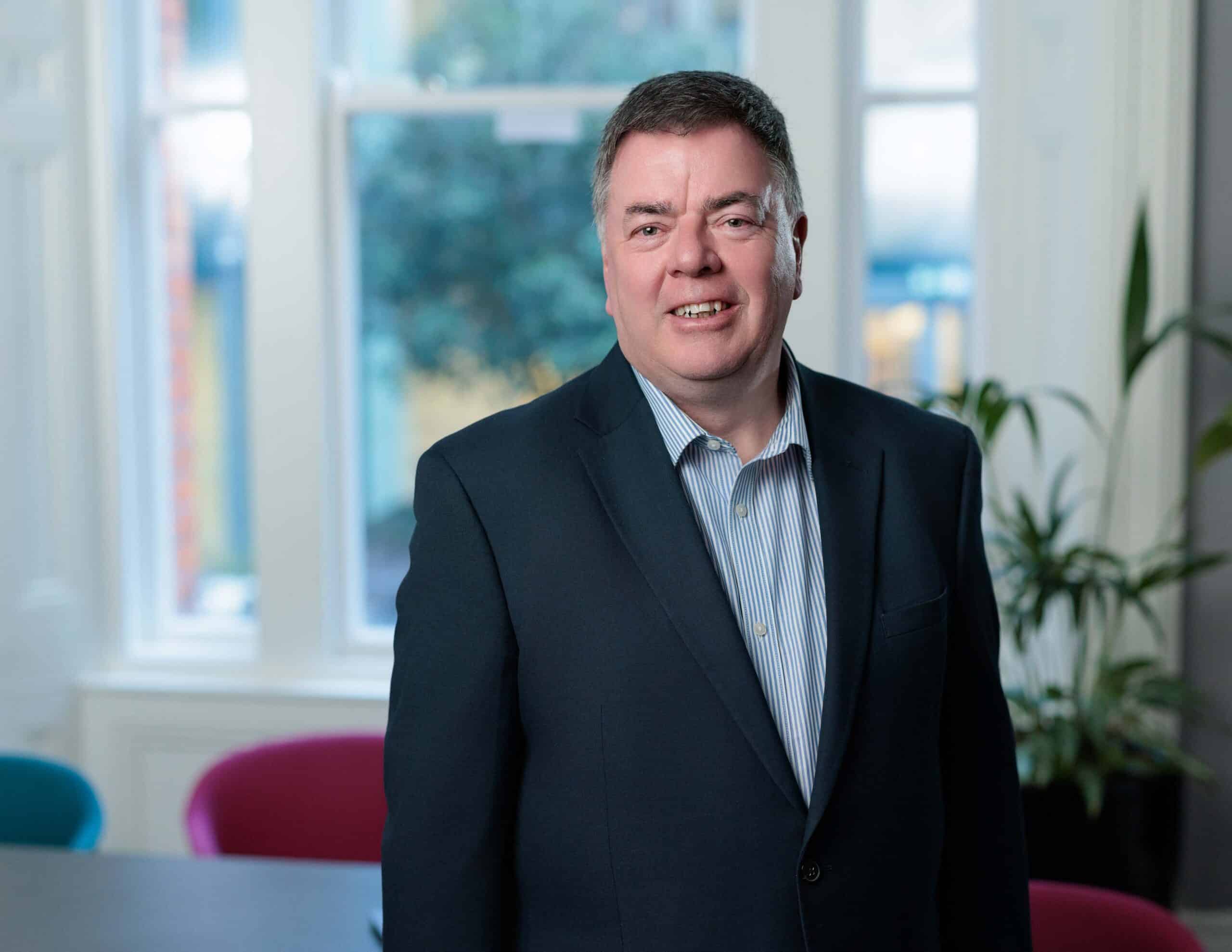
Pictured: Dave Feenan, Director of Digital Technology Skills.
As Director of Digital Technology Skills, Dave Feenan works at the intersection of industry, academia and European collaboration to help address Ireland’s digital skills challenge. Following the launch of 400 fully funded Digital4Business Master’s places, he discusses why digital capability has become a strategic business issue and the role industry-led education can play in strengthening competitiveness and innovation.
Digital skills shortages have been discussed for years, but why do you believe the issue has now become a strategic business priority rather than simply an HR or IT concern?
Organisations are transitioning to a digital-first approach. Leaders are increasingly asking themselves: “How can we leverage technology to increase speed to market, reduce costs, improve internal processes and make better use of data?”
To achieve this, new skills and mindsets are necessary. For many years, digital skills were viewed primarily through the lens of software development and coding. Today, however, digital capability has become relevant across every function of an organisation.
Regardless of role or seniority, employees need a greater awareness of how technology can enable better outcomes, while still relying on essential human skills such as critical thinking, communication, empathy and decision-making. The organisations that will succeed are those that align their business strategy with their human capital strategy.
From your perspective, how prepared are Irish organisations for the scale of transformation being driven by AI, cybersecurity, cloud technologies and automation?
Organisations are better prepared now than they were six years ago. Reflect back on COVID and the overnight digital transformation undertaken by companies. Standing still was not an option, and unfortunately, we witnessed the closure of many businesses.
However, organisations that implemented change are now better placed six years later to embrace the digital tsunami unfolding. Having experienced that journey gives them the confidence and agility to pivot again. Yes, there will be casualties, but we will also see a new breed of micro-enterprises emerge, leveraging new tools and technologies to create innovative business models and services.
You’ve worked extensively across industry, academia and European projects. Where do you currently see the biggest gap between business ambition and workforce capability?
The biggest gap is between organisations’ ambition to leverage technologies such as AI and their readiness to do so effectively and responsibly. Success depends on finding the right balance between technological ambition, workforce capability and organisational trust.
Many organisations still view AI and emerging technologies primarily through a technical lens. How do you think leadership thinking around these technologies is evolving?
It took a global disruption such as the pandemic for cloud computing to achieve widespread acceptance. Today, there is a greater understanding that it is not just about technology but also about keeping the human element at the centre of decision-making.
The technologies are an enabler, but technology alone will not create a competitive advantage. Leadership teams now have to contend with a new geopolitical world, including managing hybrid and remote teams. However, leadership teams can harness the emerging technologies to drive innovation, retain employees, and use real-time data to drive productivity.
For years, technology was viewed as the domain of the IT department and a cost. Today, its ownership is led from the C-Suite and is seen as an enabler.
How important is digital capability to Ireland’s long-term competitiveness, particularly as other European markets accelerate investment in AI and advanced technologies?
We are fortunate to have a vibrant ecosystem of startups, SMEs and multinational companies. Recent changes in R&D tax credits, the funding of research centres like the Centre of Research Training (CRT) in the Foundation of Data Science, state investment in chip manufacturing, Space Tech and a talent-first approach are just some of the ingredients required to maintain our competitiveness.
This must be backed up with appropriate policies and the reduction in the administrative burdens associated with running a business.
When you consider the global recognition Ireland has for sectors like Aviation Leasing, BioPharmaChem, Medical Devices, Financial Services, and the Food and Drinks industry, we can leverage decades of expertise and innovation in these sectors and layer emerging technologies to maintain their dominant positions.
Ireland is fortunate in that we started the investment in AI and other advanced technologies early. At Digital Technology Skills, we see first-hand the importance of long-term investment in advanced digital capabilities. Our role is to help translate emerging technology trends into practical learning pathways that support both individuals and organisations.
In 2019, through the Technology Ireland ICT Skillnet network, we launched the National Master’s in AI at UL. Supported by an industry advisory board, the programme has graduated more than 600 professionals. Combined with the 127 PhD candidates due to graduate from the CRT by 2027, these initiatives are helping build the talent pipeline needed for Ireland’s future competitiveness.
We support the Quantum Ireland network and collaborate with them and the industry to develop quantum skills courses, which are now available. Our own organisation, Digital Technology Skills, is an associate partner in the new Euro HPC AI Antenna Factory announced last year.
However, from a societal point of view, we must work harder to reduce digital poverty in Ireland, as we cannot have a two-tiered digital economy.
Can you explain the thinking behind the Digital4Business initiative and the gap it is designed to address?
The Digital4Business European Master’s Programme was developed to help address a growing challenge facing businesses across Europe: access to people with the digital skills needed to support transformation, innovation and long-term competitiveness.
At its core, the programme is designed around helping European companies and SMEs, ensuring that the skills being taught reflect the challenges businesses are facing today and are likely to face in the future.
It provides graduates to fill crucial occupational profiles that are in very high demand and are critical to the success of European businesses, training the next generation of ‘Digital Decision Makers’, and Business Professionals with knowledge in advanced digital skills who can work effectively with teams of ICT specialists to deliver projects, develop products and so forth.
The global objective of this project was to design and implement a highly innovative, effective and sustainable European Master’s Programme in Advanced Digital Skills that will provide a continuous supply of qualified digital experts, helping to address the growing digital skills gap that is hampering the development of many European Businesses. The programme was designed to appeal to the broadest possible catchment of potential students from across Europe and from many different demographics and cultural backgrounds.
The programme includes 400 fully funded places and multiple online learning pathways. How does the programme ensure that high-quality AI education is accessible, flexible and inclusive for a diverse range of learners across Europe?
Choice and delivery formats are key to lifelong learning. The programme’s modular structure allows learners to tailor their learning journey to their own professional needs and career ambitions. Some learners may wish to complete a single module, while others may choose to build towards a broader qualification over time.
Creating an appropriate delivery platform required a carefully designed approach, given that four of Europe’s leading Higher Education Institutions were delivering the required modules. This involved everything from the accreditation process to developing a timetable that accommodated participants across multiple European time zones. The AI for Business programme is a case in point, employing a hybrid learning model that combines synchronous and asynchronous activities in a fully online environment.
Expert tutors guide you through lectures, individual study, and hands-on laboratory work. Key strategies that were incorporated include problem-based learning and the flipped classroom model to enhance engagement and understanding.
Our research and collaboration with industry necessitated a flexible and innovative approach. They assisted in proposing the construct and content of the modules and advised on how the workforce of today is embracing up-skilling.
We introduced “Recognition of Prior Learning (RPL) into the process to facilitate individuals who may not have the academic qualifications but have years of industry experience. Almost 10% of the January students joined the programme via the RPL route.
For the September cohort, as well as the 400 fully funded places on offer, we also have 100 scholarship places available, specifically targeting learners facing socioeconomic barriers, underrepresentation in STEM, or geographic disparities. This scholarship scheme serves as a structured inclusion mechanism to ensure vulnerable groups are prioritised and supported.
Scholarships are awarded based on eligibility criteria and evaluation under the Equity, Diversity and Inclusion (EDI) framework, rather than academic merit, ensuring fair access for those facing barriers in traditional admissions. Overall, the scheme supports diversity, reduces inequalities, and advances digital skills development across Europe.
In your experience, with an increasingly AI-driven workplace, what skills will be most valuable for professionals across all sectors and roles?
Analytical thinking, creative problem-solving, technology literacy and emotional intelligence are becoming increasingly important. As automation becomes more widespread, uniquely human capabilities such as communication, collaboration and relationship-building will become even more valuable.
Digital Technology Skills works closely with both industry and higher education institutions. Why is industry-led education becoming increasingly important in closing the digital skills gap?
Industry is often best placed to identify emerging trends, changing workforce requirements and unmet skills needs. When we consider our Technology Ireland ICT Skillnet project, which is celebrating its 20th anniversary, everything in that portfolio is industry-led.
At Digital Technology Skills, we work closely with employers to identify capability gaps and then collaborate with the most appropriate training partner to develop programmes that address those needs.
The secret sauce is that Ireland is an exemplar at leveraging the Triple Helix of state funding and academic delivery to meet industry needs. The Digital4Business programme is an example of this model in practice, as it is funded by the EU.
Looking ahead, what do you believe businesses and policymakers need to prioritise now to ensure Ireland remains competitive in the digital economy?
We need policies that are practical, accessible and straightforward for businesses to implement. Ireland should seek to shape the future direction of European digital policy rather than simply respond to it.
Continued investment in skills development, workforce training and lifelong learning will also be critical if we want to remain competitive in an increasingly digital economy.