By Business & Finance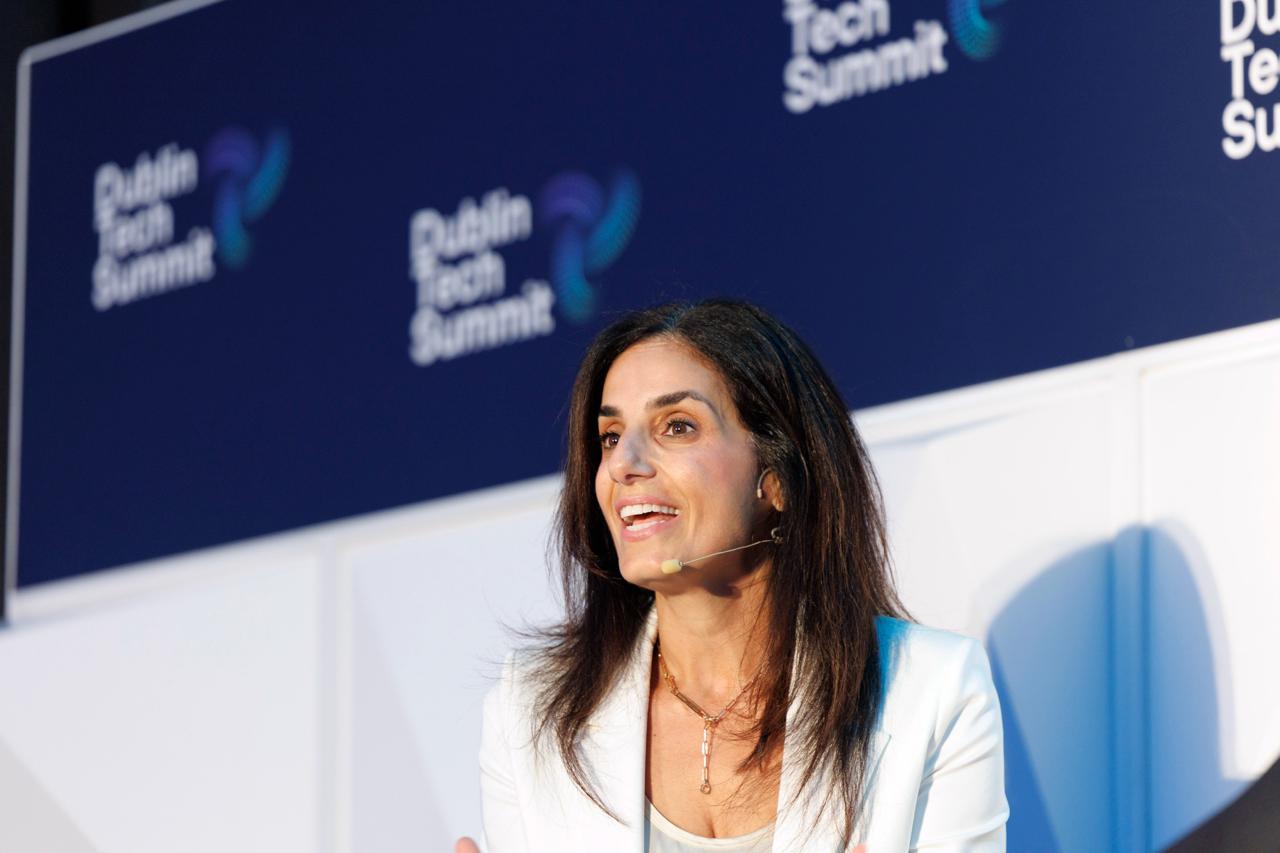
Pictured: Alvina Antar, Chief Digital Officer at F5.
From enterprise AI governance to the future of journalism and founder resilience, Day 2 of Dublin Tech Summit explored how organisations are navigating rapid technological transformation while keeping human creativity, trust and adaptability at the core of growth.
By Héloïse Chaudot
Day 2 of Dublin Tech Summit brought together global technology leaders, media executives, founders and innovators to discuss how artificial intelligence is reshaping business, leadership and society. Across fireside chats and panel discussions, speakers examined the opportunities and challenges presented by AI adoption, the growing importance of trust and governance, and the enduring value of human creativity and resilience in an increasingly automated world.
Digital is the strategic growth driver of the modern enterprise
The fireside chat focused on digital transformation, AI adoption, and leadership at F5, led by Chief Digital Officer Alvina Antar. Opening the session, the moderator congratulated Alvina on receiving the Grace Hopper Award at the Dublin Tech Summit Leaders Dinner, before exploring her nearly three-decade career across companies including Dell, Zuora, Okta, and now F5.
Alvina described F5’s strategy as differentiated by its long-term commitment to hybrid infrastructure, balancing cloud and on-premises capabilities to address customer concerns around AI, security, and data sovereignty. She emphasised that digital leadership is less about titles and more about measurable business outcomes, modernisation, and empowering employees with AI tools and training.
A major theme of the discussion was AI governance. Antar warned against “shadow AI” while arguing that excessive restrictions can suppress innovation. Instead, she advocated for governed guardrails, sanctioned AI tools, and company-wide AI enablement. She also highlighted F5’s acquisition strategy, stressing that successful acquisitions depend on integrating people and culture.
Throughout the conversation, Antar repeatedly returned to themes of adaptability, experimentation, and creating organisational cultures that embrace change rather than fear it.
AI, Media & the Value of Truth
This fireside chat examined how artificial intelligence is reshaping journalism, media trust, and the economics of news. Speaking with Almar Latour, Jennifer H. Cunningham focused on the growing challenge of misinformation and declining public trust in media. Latour argued that while the information ecosystem has become “poisoned” by misinformation and entertainment-driven content, demand for trusted journalism is now stronger than ever.
The discussion highlighted how The Wall Street Journal and Dow Jones are using AI to enhance research, data analysis, translation, and newsroom efficiency. Latour stressed that AI should automate administrative work so journalists can focus on reporting, investigation, and editorial judgment. He maintained that human editors remain essential, particularly for nuance, verification, and contextual decision-making.
A major topic was copyright and compensation for journalism in the AI era. Latour warned that unrestricted use of media content to train AI models could undermine the financial sustainability of quality journalism. He advocated for licensing agreements, stronger copyright protections, and collaborative partnerships between media companies and technology platforms.
Despite industry disruption, Latour expressed optimism that trusted journalism will remain commercially valuable and central to a democratic society.
Other Sessions from Day 2
Other sessions throughout Day 2 explored the intersection of AI, entrepreneurship, branding, and leadership, with a strong emphasis on how organisations and founders are adapting to rapid technological and cultural change.
One panel on the evolving rules of brand-building examined how AI is transforming marketing through faster content creation, customer analysis, social listening, and automated workflows. Speakers argued, however, that while AI can accelerate execution, the most successful brands will continue to depend on creativity, authenticity, and emotional connection.
Panellists highlighted the growing importance of community-driven branding, human storytelling, and trust, warning that in an increasingly crowded digital landscape, originality and clear value propositions are becoming more important than ever.
Another session focused on founder resilience and the realities of startup life, with entrepreneurs sharing candid reflections on rejection, fundraising pressure, burnout, and the emotional demands of scaling a business. Speakers discussed the importance of grit, adaptability, and maintaining strong support systems, while also stressing the role of aligned co-founders, healthy company culture, and personal wellbeing in sustaining long-term growth.
Across both discussions, a common theme emerged: although AI is reshaping industries at an extraordinary speed, long-term success will still be defined by human qualities such as resilience, creativity, trust, and meaningful relationships.
Read more:
Dublin Tech Summit opens with AI, leadership data and warnings over tech’s societal impact