By Héloïse Chaudot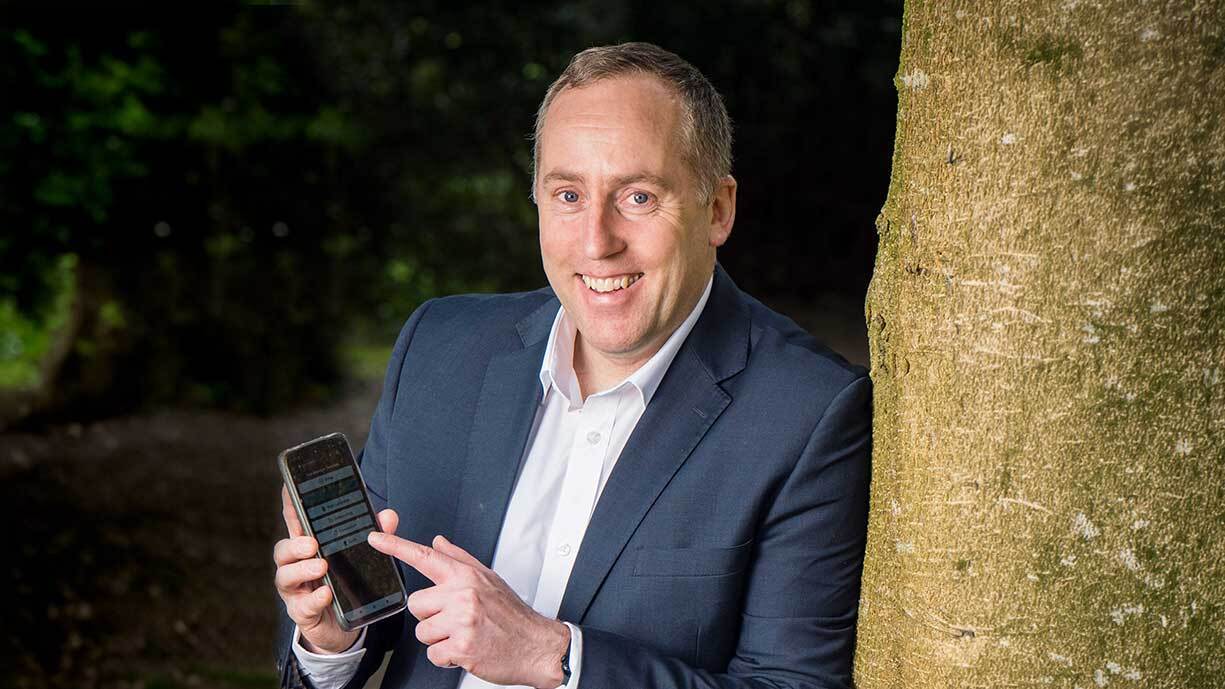
Alan Craughwell has spent more than 20 years in the disability sector and now leads AssistiV Ireland CLG, a not-for-profit social enterprise that uses app-based technology to help people with learning disabilities and autism work with more confidence and independence. Under his leadership, AssistiV Ireland is showing that inclusion is good business, not charity, with partners including HEINEKEN Ireland, Mr Price Branded Bargains and Levy Ireland.
What are your main priorities and goals in your role?
Disability and autism don’t affect most people directly, so it’s easy to overlook. My priority is simple: to show society and businesses that there’s a whole section of our workforce ready and able to work, given the right support. That means shifting the mindset from what someone can’t do to what they can – the asset-based approach – and getting employers to back that up with real opportunity.
What are your biggest challenges as CEO?
Social enterprises live in a strange middle ground, where head and heart are always competing for the final say. Balancing commercial sense with the emotional pull of the mission is the daily challenge, and it’s relentless. I never set out to be a business owner, with everything that comes with it, but here we are.
How do you keep your team/staff motivated?
We’re a small team, so our mission has to carry everything we do. What keeps us motivated is proximity to the impact; we hear directly when someone with a learning disability or autism is working with more confidence and independence because AssistiV backed them up. That’s not abstract for us; it’s daily.
What are the challenges facing the industry going forward?
Even in a time of near full employment, Ireland still has the lowest employment rate for people with disabilities in the EU. That’s the real challenge, and it existed long before today’s economic uncertainty and will still be there after it. For the people AssistiV supports, this isn’t a new problem created by the moment; it’s the moment finally catching up to a problem that was always there.
What new trends are emerging in your industry?
For us, the real trend is AI closing the cost gap. Every wave of new technology risks leaving disabled people behind, because they’re rarely seen as a market worth building for. AI changes that calculation; it makes personalised support genuinely affordable to deliver, so we can reach people the market would otherwise overlook. That’s the trend that matters, not AI as a headline, but AI as the thing that finally makes inclusion commercially viable at scale.
Are there any major changes you would like to see in your sector?
Funding and understanding of social enterprises are a real problem in Ireland. We’re profit-with-purpose businesses, not charities, but the system still doesn’t quite know what to do with us. I’d like to see Ireland take the incubation of social enterprise seriously and actually invest in it, the same way it does for tech startups. Get that right, and everyone benefits, not just the enterprises themselves.
As an employer, are you finding any skill gaps in the market?
We tend to attract people who already have a career behind them and want to put it toward something that matters. The real gap isn’t skill; it’s finding specialists willing to leave a corporate track for a mission-led one. We’re expanding the business development team over the next few months, so that’s about to be tested directly.
How did your strategy develop in the context of the banking crisis and economic crisis?
Honestly, we have had no strategy shaped by 2008; AssistiV didn’t exist then. But disability employment doesn’t move with the economic cycle the way other sectors do; it’s been at crisis levels regardless of what the wider economy is doing. So our approach isn’t reactive to booms or busts; it’s to keep innovating and building the ecosystem regardless, because the only direction that matters is up from where we’ve always been.
How do you define success, and what drives you to succeed?
Success for me is simple: it’s whether someone who was written off by the job market is now in a job and thriving in it. That’s the outcome that matters more than any ESG or DEI reporting box. What drives me is knowing most people reading this have the means to do something about it and haven’t yet; that gap is what keeps me going. With AssistiV, I want it to be there the moment someone needs it, regardless of ability.
What’s the best advice you’ve been given in business?
I’ve never had that one dramatic moment where someone pulled me aside with a piece of wisdom. What I do have is people on my board and around me who don’t just listen; they support, and they challenge, and that combination has been worth more than any single piece of advice.
What advice would you give to others starting in business?
A social enterprise is still a business. Without profit, there’s no purpose; you can’t scale, and you can’t have real impact. The mission has to be matched by hard-nosed strategy, not replaced by it. I’ll admit I’ve hidden from the cold business side myself, because the mission feels safer. I’m still learning that lesson; the sooner a founder learns it, the better.
What have been your highlights in business over the past year?
We’re close enough to our end users to see the impact daily, and one moment stands out. Someone in their first job was using AssistiV to record and track their work. That data let the employer put an actual cost on the value of what this person was doing – work that had been happening but never measured. The number came to €80,000 in savings. That’s the story I want people to hear, not a feel-good anecdote, but proof that the right support turns invisible contribution into something a business can see and count.
What’s next for your company?
Our goal as Social Impact Partner of Heineken Ireland is to support over 1,000 people into hospitality roles using AssistiV by 2030, and we’re already proving the model works in practice. What’s next is pushing beyond hospitality and retail into other sectors, because the barrier we keep running into isn’t ability; it’s employers’ own misconceptions and fears about hiring someone with a disability. Removing that barrier, sector by sector, is the real job ahead.
Where do you want your business/brand to be this time next year?
Twelve months from now, I want AssistiV recognised as a serious, investable business, not just a good cause people feel warm about. We’re actively building out our board and want more experienced voices around the table, people who can bring real commercial and governance rigour as we scale. The honest goal behind all of that is funding. We know what we need to do, and doing it properly means bringing in the investment to match our ambition, not just running on goodwill.
What is the best book you’ve ever read (non-business) and why?
I’m dyslexic, so books and I have never been close friends; most of what I take in comes through audio rather than pages. The last one that stuck with me was Shoe Dog, Phil Knight’s Nike memoir. I know, every entrepreneur says that one. But it’s proof that a messy, non-traditional path can still build something real, and given my own route into this, that landed.
What is your favourite hobby and why?
Over 14 years ago, I brought the concept of mixed-ability rugby, people with and without disabilities playing together, to Ireland. It’s now part of the IRFU player pathway for adults of all abilities. My hobby became my passion, and that passion hits cinemas nationwide on the 2nd of October with TRY, the best documentary at the Galway Film Fleadh, following four players’ journeys with their mixed-ability teams to last year’s World Cup in Spain.
What is your mantra for life?
I don’t wake up reciting a mantra. But I do think you need a purpose bigger than any job title to keep going on the hard days. If that counts as a mantra, it’ll do me.
Read more CEO Q&As:
Declan Ryan, Founder and CEO of Project Foundry