By Business & Finance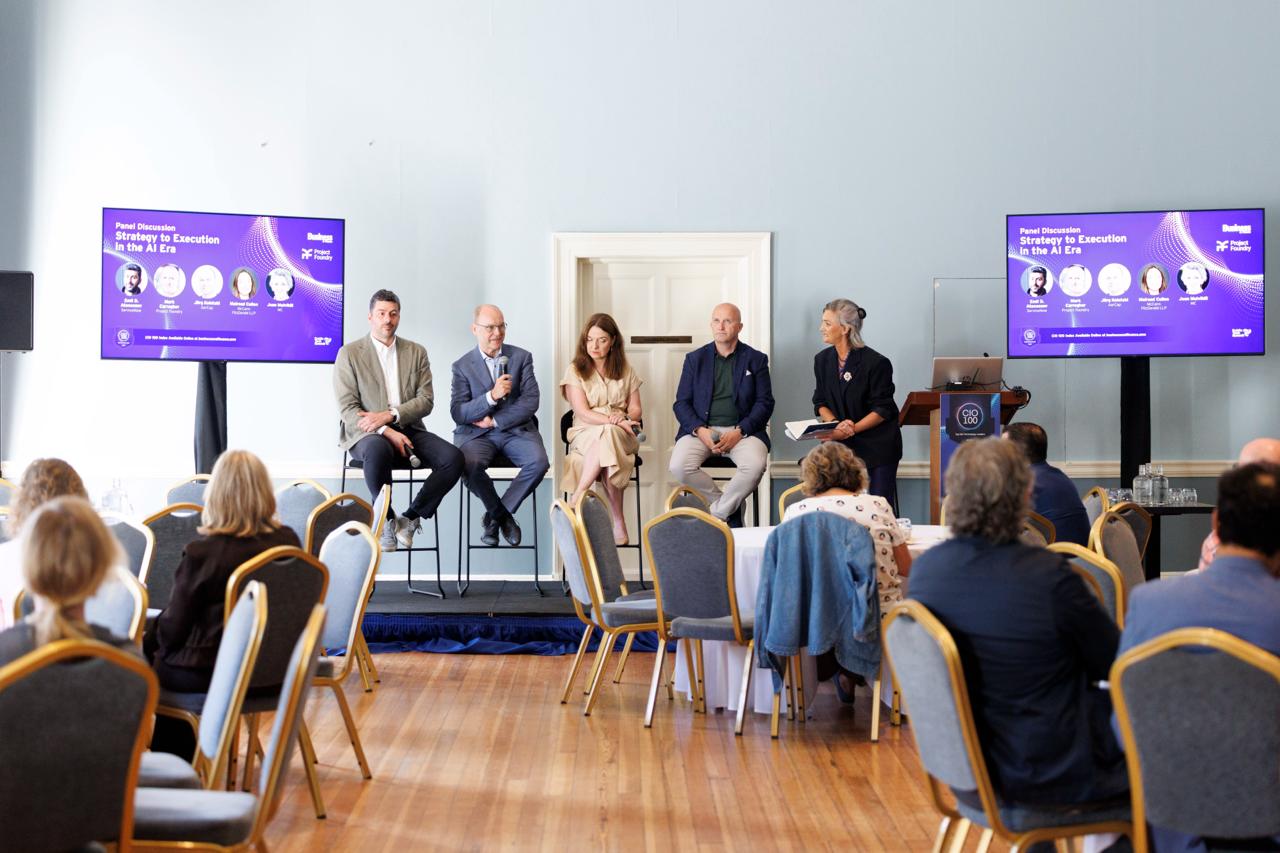
Pictured (L-R): Emil D. Atanassov, ServiceNow; Jörg Koletzki, AerCap; Mairead Cullen, McCann FitzGerald LLP; Mark Carragher, Project Foundry; and Joan Mulvihill, MC.
Following the publication of the 2026 Business & Finance CIO 100 Index, in association with Project Foundry, senior technology leaders gathered on the second day of the Dublin Tech Summit to discuss the next phase of enterprise AI adoption.
By Héloïse Chaudot
The tech leader gathering convened senior executives from Project Foundry, ServiceNow, AerCap, and McCann FitzGerald for a discussion focused on a pivotal shift: the transition of AI from initial experimentation to disciplined enterprise execution.
Moderated by Joan Mulvihill before an audience of CIOs and digital leaders, the conversation centred on governance, business value, and the operational realities of deploying AI at scale.
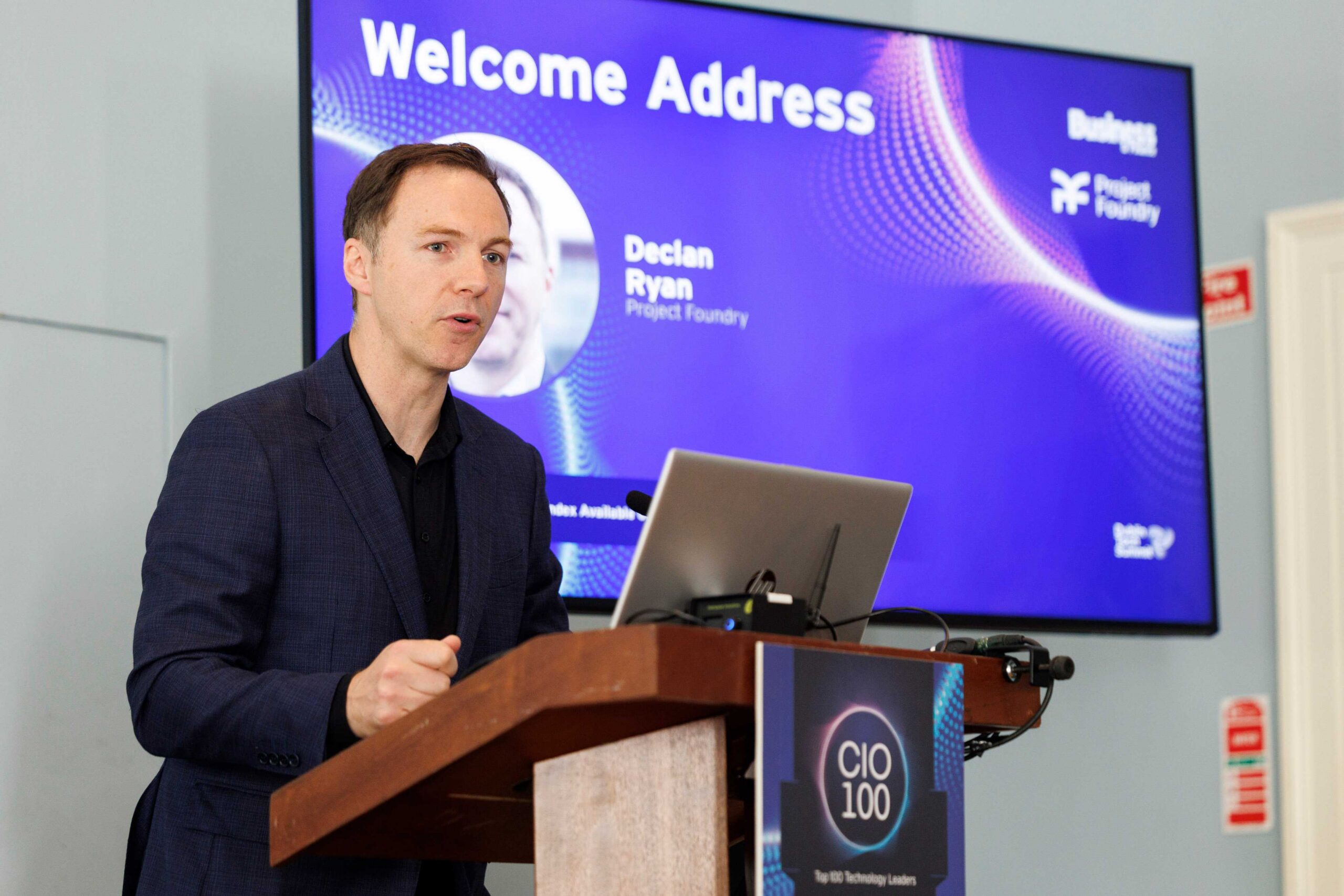
Pictured: Declan Ryan, founder & CEO of Project Foundry.
Moving beyond the hype
Speakers described AI as a long-term structural shift rather than another short-lived technology trend.
Comparisons were drawn with the internet and the printing press, underlining the scale of the transformation now underway across enterprise organisations.
Throughout the morning, the discussion focused less on possibility and more on implementation.
Panellists stressed the importance of clear use cases, defined timelines and measurable outcomes. Several warned against fragmented experimentation without a clear business objective.
Data becomes the differentiator
Enterprise data emerged as one of the key competitive advantages in the AI era.
Speakers argued that AI systems become significantly more valuable when grounded in proprietary company information rather than public internet data alone.
Contracts, operational records, technical documentation and institutional knowledge were all highlighted as high-value assets.
AerCap’s global asset management operations were referenced as an example of how AI can unlock insights from large volumes of unstructured information accumulated over decades.
The discussion also pointed towards the rise of domain-specific AI models designed to improve reliability and preserve organisational knowledge.
Governance and trust take centre stage
Governance was another major theme throughout the discussion.
Panellists acknowledged growing concerns around hallucinations, model transparency, and uncontrolled AI adoption within organisations.
Several speakers noted that employees are already using AI tools widely, often without formal oversight.
In response, organisations are introducing stricter governance frameworks. These include staged access controls, role-based permissions, internal training, and prompt governance policies.
Human oversight was repeatedly described as essential, particularly in customer-facing or high-risk environments.
AI access was compared to a driver’s licence system, where employees may require training or certification before using more advanced capabilities.
The changing role of the CIO
Technology leaders are increasingly expected to balance innovation with governance, commercial value and organisational readiness.
Speakers highlighted the importance of understanding infrastructure costs, token consumption and long-term return on investment before scaling AI initiatives.
Several argued that traditional productivity metrics are no longer sufficient. Instead, organisations should focus on measurable operational and commercial outcomes.
As the CIO 100 Index 2026 recognises leaders driving digital transformation across Ireland, the discussion highlighted how enterprise technology leadership continues to evolve.
The message from the morning was consistent: the next phase of AI will be defined not by experimentation alone, but by organisations capable of scaling responsibly and delivering measurable business value.