By Business & Finance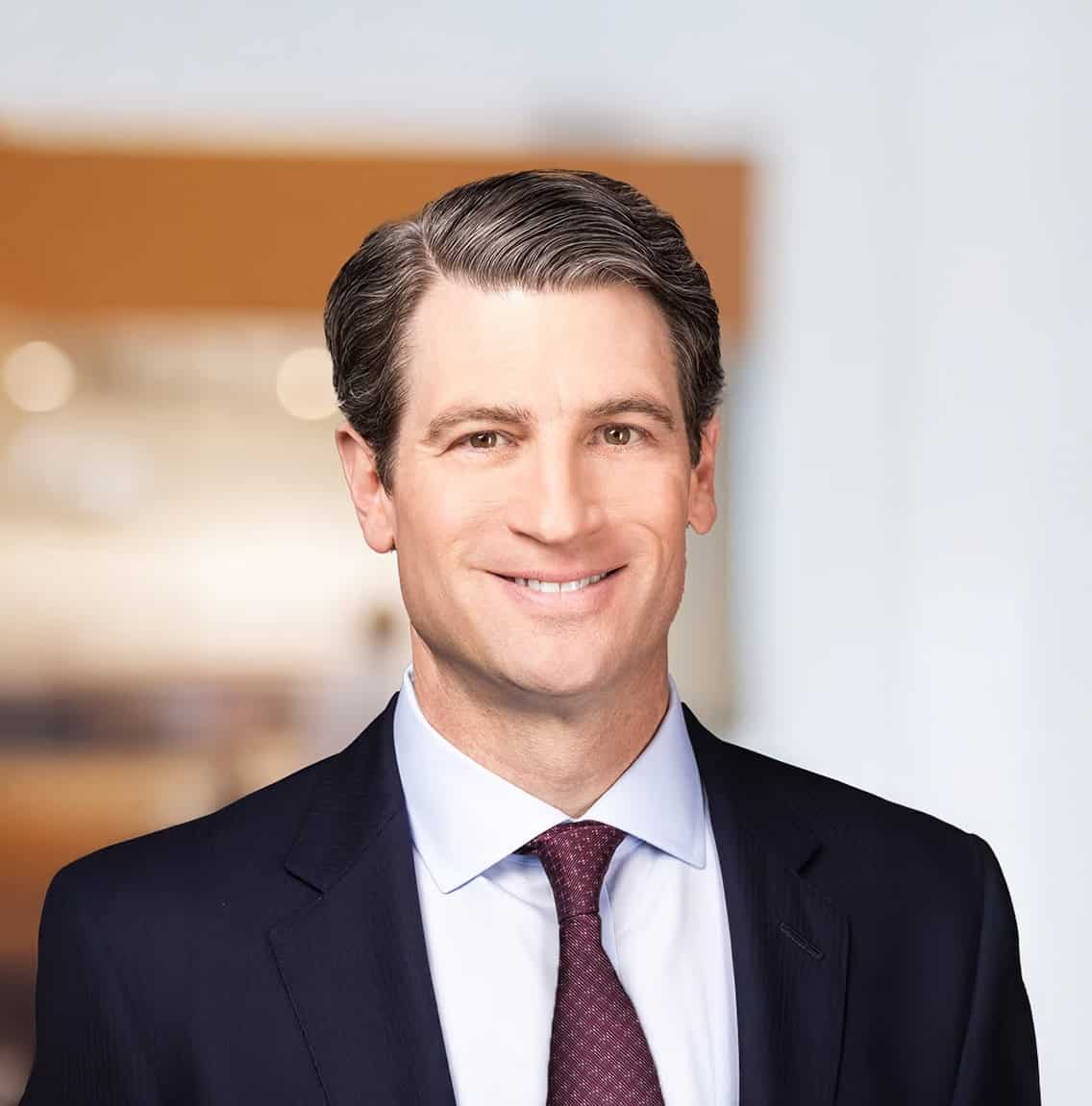
Brent McIntosh, Chief Legal Officer & Corporate Secretary of Citi, speaks to David Monaghan, Interim Managing Editor of Business & Finance, about the durability of the US-Ireland business relationship, tariff challenges, Citi’s future plans and what business should look out for in the future.
Note: This piece was originally published in Business & Finance annual magazine 2025/26, vol. 62, available to read, with compliments, here.
Brent McIntosh serves as Citi’s Chief Legal Officer and Corporate Secretary. He oversees Citi’s Global Legal Affairs & Compliance organisation, which comprises the Legal Department, Independent Compliance Risk Management, Citi Security and Investigative Services, and Citi’s Regulatory Strategy and Policy function. He is also a member of Citi’s Executive Management Team.
Before joining Citi, McIntosh was United States Under Secretary of the Treasury for International Affairs from 2019 to 2021, where he directed the Treasury Department’s engagement in the G7 and G20, represented the United States on the Financial Stability Board, and managed US participation in the IMF and World Bank.
From 2017 to 2019, McIntosh served as General Counsel of the Treasury, leading a team of around 2,000 lawyers and overseeing the department’s regulatory reform work. Between 2006 and 2009, McIntosh worked at the White House, first as Associate Counsel to the President and later as Deputy Assistant to the President and Deputy Staff Secretary. Before that, he was Deputy Assistant Attorney General at the Department of Justice, focusing on national security matters.
David Monaghan (DM): Over the past several decades, Ireland has become a critical partner for US investment. What factors have most contributed to the strength and durability of the US-Ireland business relationship?
Brent McIntosh (BM): You’re right that Ireland is of strategic importance for US businesses. Citi has been in Ireland for more than 60 years, and that’s a testament to the US-Ireland partnership and Ireland’s importance. Ireland offers a stable and resilient economic environment. That means a solid foundation for long-term growth, and the government’s pro-business policies, including on free trade and competitiveness, make it a magnet for multinationals such as Citi. Its position as a vital gateway to the European Union provides unparalleled market access.
Citi is among many companies that have benefited from Ireland’s highly-skilled, educated, multilingual workforce, which is well-suited for the demands of international business and technological innovation. That’s a powerful combination of factors that has fostered an enduring synergistic relationship.
DM: How has Ireland’s role within Citi’s global network evolved, and what are Citi’s future plans for this hub?
BM: Ireland’s importance within Citi’s global network really mirrors the country’s ascent as a global financial services hub. Our operations in Ireland have expanded dramatically since we first opened our doors here in 1965. Today, Citi has nearly 3,000 colleagues from over 60 nationalities working across banking, operations, technology, cybersecurity and risk management. We are proud to be the leading corporate and investment bank in the country — we serve as financial adviser to Ireland’s largest and most industry-leading corporates.
We also operate a major “Citi Solution Center” in Ireland, and we call Dublin home to our European headquarters. We are moving next year to a brand-new, state-of-the-art, 300,000-square-foot European HQ on the North Quays. That demonstrates our steadfast commitment to Ireland. The country will continue to play a critically strategic role in facilitating trade, investment and financial flows between Europe and the rest of the world, and we are actively investing to support Irish businesses globally for decades to come.
DM: How will agreements between the EU and the US on tariff ceilings shape transatlantic trade and investment, and how is Citi helping its clients navigate potential shifts in US trade policy?
BM: The recent tariff ceilings represent a welcome step towards stability and predictability in transatlantic trade. We anticipate that trade policy will remain a central pillar of the US administration’s economic agenda and continue to evolve, which will necessitate further bilateral negotiations and periodic reviews.
This is a dynamic landscape, and it demands vigilance and strategic agility from businesses, especially regarding supply chains, market entry and investment decisions. We are well-positioned to help our clients navigate these complexities: Our global network gives us a unique vantage point to connect the dots across borders, execute at scale and deliver real-time insights that clients need. It doesn’t matter whether the firm is advising on hedging strategies or re-evaluating supply chain options — we have a diversified business model that provides the strength and flexibility to adapt quickly. That way, we can ensure our clients continue to capitalize on transatlantic opportunities.
DM: What are the EU’s key financial regulatory priorities, and where can the EU and US find greater regulatory alignment?
BM: The EU seems focused on financial stability, consumer protection and fighting financial crime. The EU system leads to the adoption of comprehensive, unified regulatory frameworks, such as MiCA for crypto-assets. That’s in contrast to the US regulatory environment, which features multiple federal agencies, each with rule-making power, and a patchwork of state and federal laws.
Despite the differences, I think there’s a real opportunity for regulators on both sides to work together more closely. You have forums such as the G7, G20, the Financial Stability Board and the Basel Committee, which allow for open dialogue among major financial centers. That’s essential. It allows the development of common principles and standards that are in harmony. We see this as particularly important as it relates to cross-border information sharing to combat illicit finance.
Real alignment would reduce legal uncertainty and facilitate the responsible adoption of new technologies, ultimately making the global financial system safer and more innovative.
DM: Ireland is now the fifth-largest source of FDI into the US. Where do you see the next wave of opportunity for Irish companies scaling into the US market?
BM: There are more than 700 Irish companies in the US, so the strong economic bridge is undeniable. Technology and digital transformation companies have potential for expansion in the US. That’s particularly true in digital, data, cloud and next-gen managed services. And this opportunity is further fueled by Ireland’s expertise in fintech, including secure payments, APIs and blockchain.
The significant presence of US life sciences and healthcare companies in Ireland offers another clear pathway for growth in US-Ireland economic ties, as the US market offers greater access to capital that can accelerate their ability to scale.
DM: What trends should businesses in Ireland be conscious of?
BM: To boil it down to just three, I’d say digital assets, artificial intelligence and regulatory reform.
No one can doubt that the digital asset landscape is rapidly evolving and becoming a more integrated part of the financial system. Citi is actively pursuing ways to provide faster and more efficient payments around the world to meet client needs, while ensuring that we’re responsibly managing risk.
Everyone is talking about AI. AI is playing an ever-growing role in financial institutions’ operations. It enhances fraud detection, risk management and personalised client services, among other activities. That said, AI also introduces complex legal challenges such as data breaches and compliance with evolving privacy regulations. That means businesses like ours must prioritize data quality and ensure robust guardrails are in place.
Regarding regulatory reform, particularly in areas such as Basel III Endgame – which addresses the capital banks are required to hold – we’re eager to see changes that simplify and recalibrate existing rules. These changes must balance safety and soundness with promoting growth and competitiveness. We think that, collectively, these trends highlight the need for businesses to be agile, technologically savvy and proactive in navigating the regulatory landscape while serving clients across markets.