By Héloïse Chaudot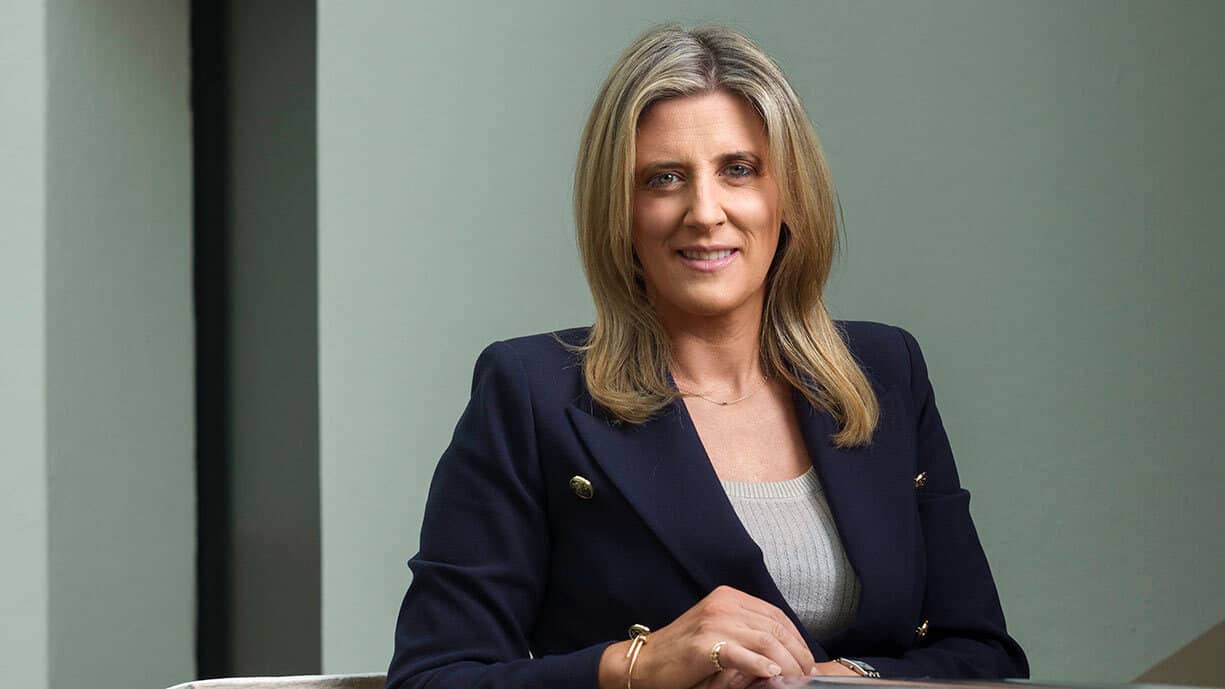
Emma Redmond is Associate General Counsel and Head of OpenAI Ireland at its EU headquarters in Dublin. Before joining OpenAI in 2023, she held senior roles at Stripe, Ancestry, LinkedIn, and Conversant. She also served on Ireland’s AI Advisory Council and is an adjunct professor at UCD Sutherland School of Law.
What are your main priorities and goals in your role?
My priority is to help make Ireland a place where AI is deployed well: useful, trusted and connected to real economic and social benefit. Ireland can be more than an AI adopter; it can be an AI deployer.
That means growing our Dublin team, supporting customers and developers and helping people move from curiosity to confident adoption.
What are your biggest challenges as Head of OpenAI for Ireland?
The biggest challenge is pace. AI has moved from something abstract to infrastructure very quickly.
Access alone is not impact; deployment is. Users have high expectations, so we listen, govern well and earn trust as we build.
How do you keep your team/staff motivated?
I believe motivation starts with trust. I try to give people autonomy, be clear on objectives, listen and create enough space for people to enjoy the journey as well as do serious work.
Seeing our tech in action really helps: we recently had transition year students using Codex to code and help build new businesses over a week at Dogpatch Labs.
What are the challenges facing the industry going forward?
The industry has to close gaps in skills and confidence. Businesses are already using AI, but many are still scratching the surface. The challenge is turning basic use into structured workflows, productivity and growth – that can drive revenue and economic benefit. Upskilling is key.
What new trends are emerging in your industry?
It’s about deployment. We are moving beyond prompts into agents, coding tools, multimodal work and AI embedded in daily operations. The interesting question is no longer whether people will use AI, but how well they’ll use it.
Are there any major changes you would like to see in your sector?
I would like to see more and more practical AI literacy.
Regulation, privacy and safety matter enormously, but people also need hands-on confidence: what to use, how to use it and when. That’s why we have established the OpenAI Academy, a free online training portal for anyone anywhere on any device to upskill themselves.
As an employer, are you finding any skill gaps in the market?
Not specifically; I actually think fascinating new roles are emerging, like privacy engineering and forward deployed engineering. These require people who combine technical fluency with judgement and critical thinking.
How did your strategy develop in the context of the banking crisis and economic crisis?
My general instinct is to stay close to users and solve real problems in tougher times. OpenAI was founded in 2015 and was a relatively smaller organisation during those times, so not as impacted as perhaps others were.
How do you define success, and what drives you to succeed?
Success is seeing technology make life or work genuinely better: it feels shared. Technology scales; relationships compound. The best AI strategy starts with real work, real users, and real outcomes.
I see SMEs like Lenehans Hardware, a 5th-generation Irish business that embraced AI to grow its business and provide brilliant customer service. It’s an example of AI augmenting the human experience. That is success in my eyes.
What’s the best advice you’ve been given in business?
The best advice came from growing up around my parents’ family business in Galway: there is no substitute for putting in the graft, treating people well properly and building relationships for the long term.
What advice would you give to others starting in business?
Start with a real problem, not a shiny idea. Be curious, get comfortable with ambiguity, protect the data or insight that makes you different, and use AI to test, iterate and learn faster.
What have been your highlights in business over the past year?
A highlight has been watching our OpenAI for Ireland programme come to life through Patch, Dogpatch Labs and our SME Accelerator. I love seeing builders turn an idea into a prototype in hours. What a 17-year-old can do today, with a good idea and help from Codex, is unreal.
What’s next for your company?
To continue to innovate and grow: fostering the Irish Dublin team here, supporting users and customers and developers across Europe and helping SMEs, founders, young builders and communities use AI with confidence and impact.
Where do you want your business/brand to be this time next year?
I actually look at it through the eyes of the user: we currently have over 1million people using ChatGPT in Ireland; how can we be useful every day to them? I hope that we show we’re not just about a chatbot, but an intelligence layer which helps power businesses and economic growth here.
What is the best book you’ve ever read (non-business) and why?
One book that stayed with me is To Kill a Mockingbird. It is about judgement, courage and empathy, which are very useful things to carry into leadership.
What is your favourite hobby and why?
I’m a dancer and really enjoy it. I try to stay fit and run a bit and ski, until my knee gave way! I recently took up the fiddle to learn traditional Irish music again and am loving it, and I also play the piano at home.
What is your mantra for life?
My mantra is: ask better questions, trust good people and keep moving forward. My grandmother used to say, “What’s for you is for you, and what’s for you won’t pass you.”
No one has all the answers, but a good start is to have the right people thinking about the biggest problems. You can’t go far wrong.
Read more CEO Q&As:
Francesco De Stefano, CEO & Co-Founder of Caracol