By Business & Finance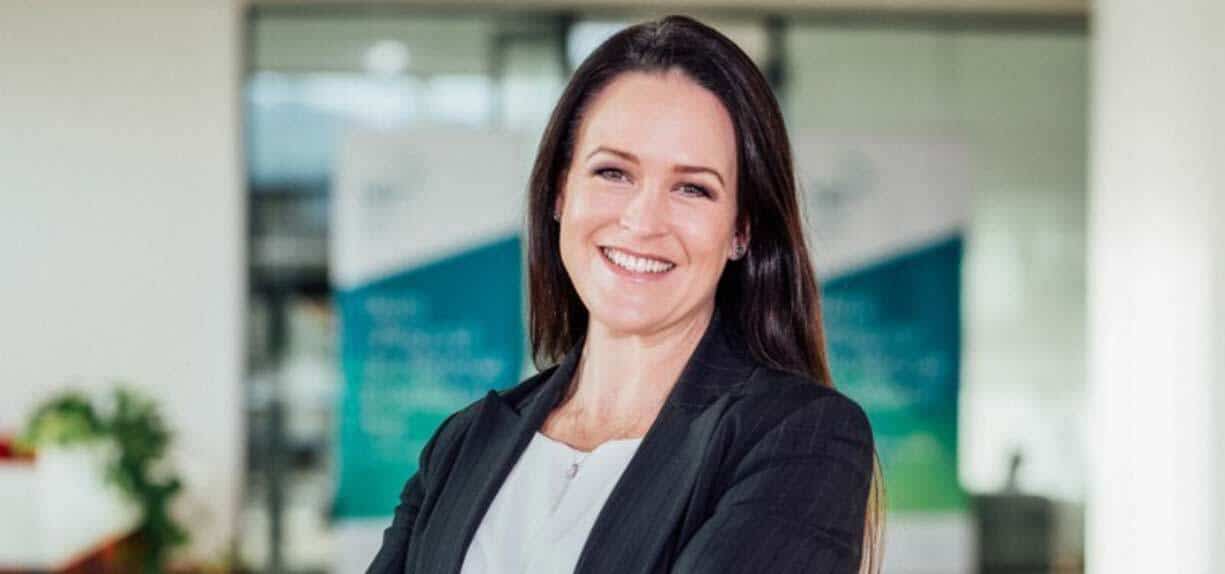
To mark International Women’s Day 2026, senior executive women share their thoughts on the Give to Gain principle. Tara Collins is Chief Marketing Officer of National Broadband Ireland. She is responsible for brand and communications strategy, stakeholder engagement, and demand stimulation.
The theme for International Women’s Day 2026 is Give to Gain. In a business context, what does this mean to you as a leader?
To me, Give to Gain is about long-term value creation. The best leaders understand that when you invest in others, in capability, in trust, and in opportunity, you build stronger organisations and more resilient outcomes.
In my own role leading Communications and Marketing for National Broadband Ireland, I see this play out every day. We are delivering one of the largest infrastructure programmes ever undertaken by the State. It requires deep collaboration across Government, industry, local communities and our own teams. When you give people responsibility, trust them with complex challenges and share credit for success, the return is credibility, momentum and impact at a national scale.
Give to Gain is not altruism. It is a strategy.
Looking at your own career, what opportunities or support were most pivotal in accelerating your leadership journey, and how are you now paying that forward?
Two things accelerated my journey: stretch responsibility and sponsorship.
Early in my career, I was given roles that were slightly ahead of my comfort zone. That forced growth. Just as importantly, senior leaders backed me in rooms I was not in. They put my name forward for projects and trusted me with visibility.
I now try to do the same. At National Broadband Ireland, we are delivering a programme that will connect hundreds of thousands of homes, farms and businesses to high-speed fibre infrastructure. That scale creates opportunities for people to step up. I am deliberate about pushing high-potential women into decision-making forums, encouraging them to lead major workstreams and ensuring they have visibility in the rooms where strategic decisions are made.
Where do you believe organisations are still falling short in advancing women into senior decision-making roles, and what tangible actions would you prioritise?
Many organisations have improved representation at the middle management level. The drop-off still tends to happen at the transition to executive and board roles.
Too often, women are praised for execution while others are rewarded for strategy. To change that, leaders must intentionally rotate women into commercially critical mandates, P&L responsibility and major transformation programmes. Visibility in high-stakes environments builds confidence on both sides.
I would also prioritise transparent succession planning. If leadership pipelines are opaque, bias fills the gaps. Clarity forces accountability and ensures talent is actively developed rather than passively discovered.
In today’s economic climate, how can businesses ensure that gender equality remains a strategic priority rather than a secondary consideration?
When markets tighten, organisations default to what feels urgent. Gender equality must therefore be embedded in performance metrics, rather than treated as a parallel initiative.
Link diversity directly to growth, innovation, and better decision making. Diverse leadership teams challenge assumptions and improve outcomes. That matters even more in complex sectors like national infrastructure, where long-term investments shape the economic future of a country.
If gender equality is tied to executive KPIs and board reporting, it remains strategic. If it is left to goodwill, it becomes optional.
What is one practical commitment you believe every business leader should make in 2026 to truly embody the principle of Give to Gain?
Make one senior woman visibly more powerful by the end of the year than she was at the beginning.
That could mean giving her budget authority, ownership of a critical programme, or a seat at the executive table. Not as a gesture, but with real accountability.
If every leader made that commitment, the cumulative impact across organisations, industries, and national institutions would be transformative.
Read more on International Women’s Day:
“Women in the EU are more likely to have a degree” – Jane McDaid, Founder of THINKHOUSE
“This economic climate is exactly why equality must stay strategic” – Elaine Purcell, CMO of AIB