By Héloïse Chaudot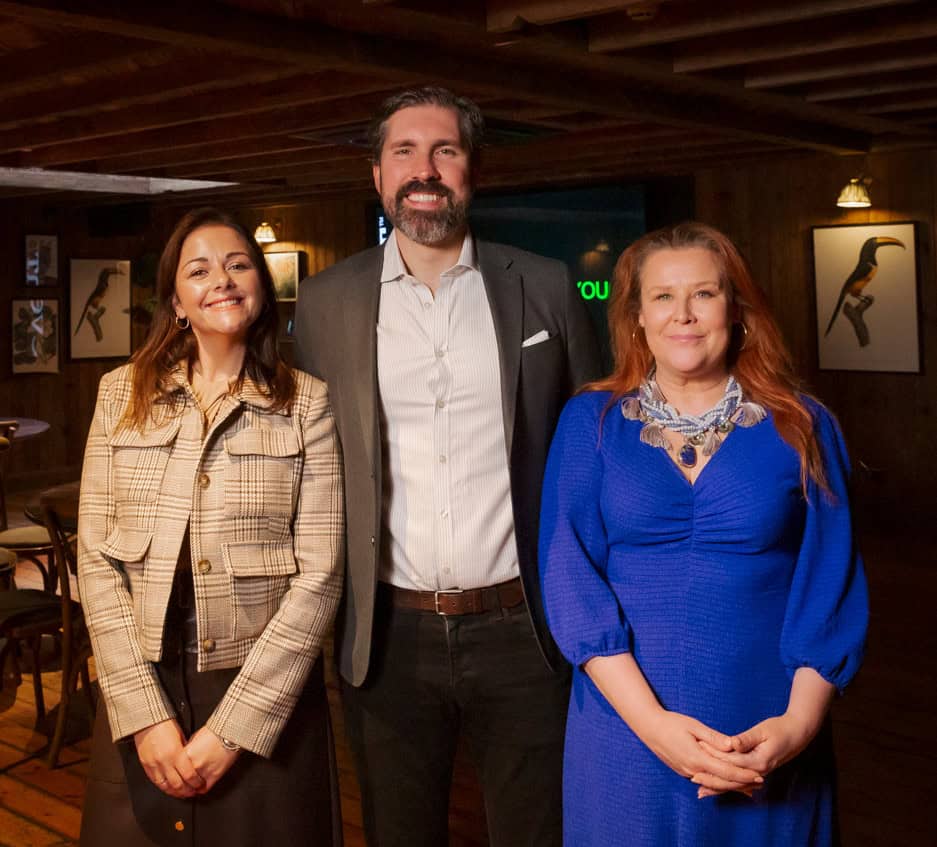
Pictured (L-R): Siobhan Smith, Expleo; Tim Sutter, Cvent; and Louise Hickey, One4all.
On 23 September, CMOs and marketing professionals gathered at the Dean Dublin Centre for a breakfast discussion on brand building in the age of AI.
The panel, moderated by Tim Sutter from Cvent, brought together Louise Hickey, Marketing Director EMEA at One4all Group, and Siobhan Smith, Vice President of Brands and Communications at Expleo Group.
AI is making it easier for brands to create content, reach customers and automate marketing activity. As adoption accelerates, marketing leaders face a more fundamental challenge: how to use the technology without weakening the trust, judgement and human connection that underpin a strong brand.
The discussion highlighted a growing tension for marketers. As AI-generated content becomes increasingly widespread, the panel also considered whether this could create an opportunity for brands to differentiate through human connection.
“Is AI kind of eroding people’s trust because it’s everywhere and we don’t know what’s real and what is not, and is that an opportunity for us to show that, honing in on the human connection?” commented a guest in the audience.
The message from the panel was not that marketers should avoid AI. Instead, they should identify where it genuinely adds value, establish clear brand and governance principles and ensure that human judgement remains at the centre of the process.
AI is creating a second audience for brands
The panel argued that brands now have a second audience: AI systems and large language models that increasingly influence how people discover and evaluate companies.
Traditional SEO remains important, but marketers are also considering answer engine optimisation and generative engine optimisation as consumers and business buyers increasingly use AI tools to find information.
That means brands need to think about how their websites and wider digital presence are interpreted by these systems. Clear headings, FAQs, structured information and content that directly answers common questions can all play a role.
But the process extends well beyond a company’s own website. Reviews, forums, customer service responses, PR, thought leadership and other third-party sources can all contribute to the information available about a brand.
This is particularly significant in B2B, where buyers can use AI and online research to investigate companies, compare suppliers and build shortlists before ever contacting a salesperson.
The result is a much larger dark funnel in which brands need to establish visibility and credibility before they know a potential buyer is in the market.
Brand governance starts with the fundamentals
For the panel, the response to these challenges begins with the fundamentals of brand building.
Before deciding where AI should be used, marketers need to understand their brand identity, tone of voice and the way they want to build trust with customers.
“It sounds like, obviously, it’s almost going back to basics. The fundamentals haven’t changed. But it also sounds like AI is kind of creating some brand governance issues. How do you see yourselves tackling those?” Siobhan Smith noted.
That responsibility also extends beyond the marketing department.
If salespeople, customer service teams and other employees are producing content that could ultimately be associated with the brand or picked up by AI systems, they need to understand the same principles.
Customer service was highlighted as one area where this is particularly important. Public responses on platforms such as review sites can contribute to how a company is represented online, making consistency between customer service and brand communications increasingly important.
For One4all, AI adoption also brings an additional layer of governance because the business operates in a regulated sector.
Louise Hickey, One4all, said, “Think global, act local. For example, Ireland is completely leading the charge in terms of AI and legislation. So again, we’re owned by a U.S. company. I remember a couple of years ago when they first sent out some guidelines around the usage of AI, I actually had to go back to them and go, in Ireland, we actually have some legislation we need to meet.”
The company has established an AI council to assess how the technology is used, including considerations around disclosure, accessibility and compliance.
Start small and understand where AI adds value
The panel also cautioned against adopting AI simply because the technology is available.
“What’s a good first or maybe even second or third step that you think everyone in the room could look into? I would definitely say start. Start small and learn. I can tell you about a failure that we had, which we learned from. I’d say no failures on feedback, but, you know, early on, we actually spent a fortune with an agency to create this AI agent that would basically repurpose our content, and it would really quickly turn it into blogs and LinkedIn content.” Siobhan Smith argued.
One example discussed was the use of AI to make traditionally static B2B customer personas more dynamic, with agents able to update information and feed it into wider go-to-market activity.
The panel stressed, however, that these applications still require human judgement. AI can support the process, but marketers need to understand when its output is useful, when it needs to be challenged and where human expertise remains essential.
The human side of AI adoption
AI adoption is also unlikely to be uniform across marketing teams. Some employees will become early adopters, while others may need more support and training.
“We’re asked to do 50-minute things, and then still have it all, 10 minutes ago, so you can see already where people are not leaning into it for the efficiencies; they are kind of struggling a little bit”, Louise Hickey said.
“What I would suggest is to sit down with your team and do a bit of a SWOT analysis with them on where those areas are that they need a little bit more training, or where they can really lean into AI to get the most out of it.”
The panel also raised concerns about the impact of AI on the next generation of marketing professionals, particularly if automation reduces opportunities for younger employees to develop experience through entry-level roles.
For marketing leaders, that makes education and development an important part of AI adoption, not simply a question of implementing new technology.
Ultimately, the discussion returned to the same question: how can brands become more efficient through AI without becoming less human?
The answer from the panel was not to reject the technology, but to use it with clear boundaries, strong brand foundations and critical thinking.