By Business & Finance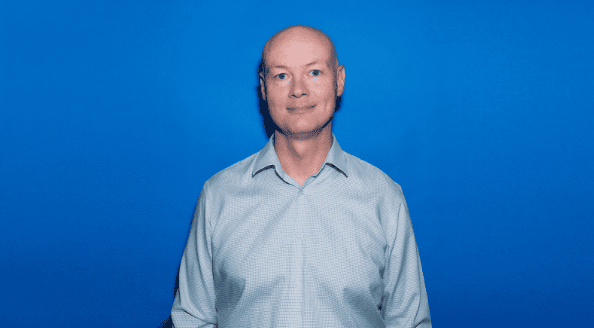
Conor McCarthy is the CEO, CTO and co-founder of Flipdish, a leader in AI technology, helping independent takeaways and restaurants thrive. He co-founded the company in 2015 and has since led its growth across the UK and Ireland, achieving tech unicorn status following a $100m investment round.
By Héloïse Chaudot
What are your main priorities and goals in your role?
Defining the direction we want to go as a company and keeping everyone going in the same direction. There are a hundred different ways we could go, but if we are all trying to bring the company in a different direction, it ends up going nowhere.
What are your biggest challenges as CEO?
We’re seeing really strong demand for our product and, as it’s expanded, it has become more complicated to onboard new customers. This involves workflows that touch marketing, sales, onboarding agents, menu specialists, field installers, account managers, support, and the interaction with the product engineering team, building systems they work with. It is a fun and interesting challenge to work out how to onboard thousands of restaurants quickly and efficiently, but definitely a challenge.
How do you keep your team/staff motivated?
We try to keep people close to the positive impact they are having in the world. Every week in our all-hands meeting, we spotlight a positive review a customer has left for us online. Every staff member does a work placement, which, while designed to help us learn more about our customers’ needs, also helps our team see how we are helping and how we could help restaurants and their customers.
As an employer, are you finding any skill gaps in the market?
In Ireland, it seems that there’s an abundance of strong financial talent. There seems to be a well-oiled machine there where people do well in school, get into a strong, relevant university course, and then join a top-tier accountancy or financial firm. There are lots of good engineers; however, also lots of competition here with big US tech firms. We’ve had to put in a lot more effort to find strong & professional product managers, product designers and marketing professionals.
How do you define success, and what drives you to succeed?
The definition differs based on the particular goal. If we’re looking at a feature for our customers, we’d focus on a metric that measures the impact of the feature on the customer (as opposed to ‘did we ship the product’). If we’re talking about overall business success, we’d do similar, but in a broader context of how much positive impact we’ve had on our customers. And if we’re talking about life in general: I don’t attempt to. Life is too wonderful and complex to apply a definition of success to. If I were to try, I’d start to think of things like having a happy family, having friends, achieving more than I expected to and wondering if humanity is better off because I existed or am I just using up space.
What advice would you give to others starting in business?
Probably that you can be successful even if you ignore almost all the advice you hear. There are 1000s of ways to achieve something and no single correct way of doing anything. And advice generally comes from a set of experiences and context that is quite different to yours, and good advice applied to the wrong situation won’t work well.
I’d advise that people don’t do anything without trying to understand it first. For example, don’t sign a contract because “this is standard” (everything is negotiable, and you should at least try asking for what you want). Don’t copy other companies without understanding the reason they’re doing what they are doing.
What have been your highlights in business over the past year?
This year, the team has built a phenomenal product, an AI Phone Agent, which takes a monumental workload off restaurant operators by handling a wide range of phone calls, such as taking complex orders and answering questions about the restaurant. It was definitely a highlight announcing this at our Dished Live ‘25 event in London and doing a pretty involved live demo that worked flawlessly.
It’s also great to see our customers experience rapid growth while powered by the Flipdish product suite, such as IRO Sushi, which added 9 locations last year, and is forecasting 42 this year. Rio’s Piri Piri who added 13 sites last year, and plans 50 this year. And Chicken Cottage, which also added 13 sites last year, and forecast 86 more in 2026.
What’s next for your company?
AI is transforming how we onboard restaurants and how they run day to day. Onboarding is moving from a manual, multi-day process to something that happens in minutes, which will meaningfully change the economics of the industry. We’re getting to a place where restaurants upload a menu or describe their setup, and the system auto-builds their site, menu structure, branding, SEO, and financial configuration with minimal human involvement.
Day to day for restaurants, AI is becoming an invisible operating layer. Phone agents take orders and never miss a call. AI quietly optimises menu layout, images, and checks for missed allergen information. Operational issues are detected automatically from reviews, order data, and call patterns. Marketing campaigns are generated and optimised without staff involvement.
Where do you want your business/brand to be this time next year?
We want every delivery and takeout-led restaurant operator in the UK and Ireland to know that, if they want an efficient, stress-free operation, then Flipdish is the obvious choice.
What is your favourite hobby and why?
Mountain biking. I’m lucky to live beside the Dublin Mountains, so I can get out on the trails regularly. It’s the perfect mix of being outdoors, pushing myself physically (necessary as my day job has me sitting behind a computer for most of the day) and switching my head off from everything else. It gives me no choice but to focus only on the immediate job at hand (ambulance avoidance) and gives my mind a rest from everything else. I also like that it causes you to focus on the ‘happy path’ and not on the rocks and trees. This is definitely something I think helps in business – to focus on all the things that could go right and not burden your thoughts with things that could go wrong.
What is your mantra for life?
Live and let live.
Read more CEO Q&As:
John O’Leary, CEO of SE Systems