By Business & Finance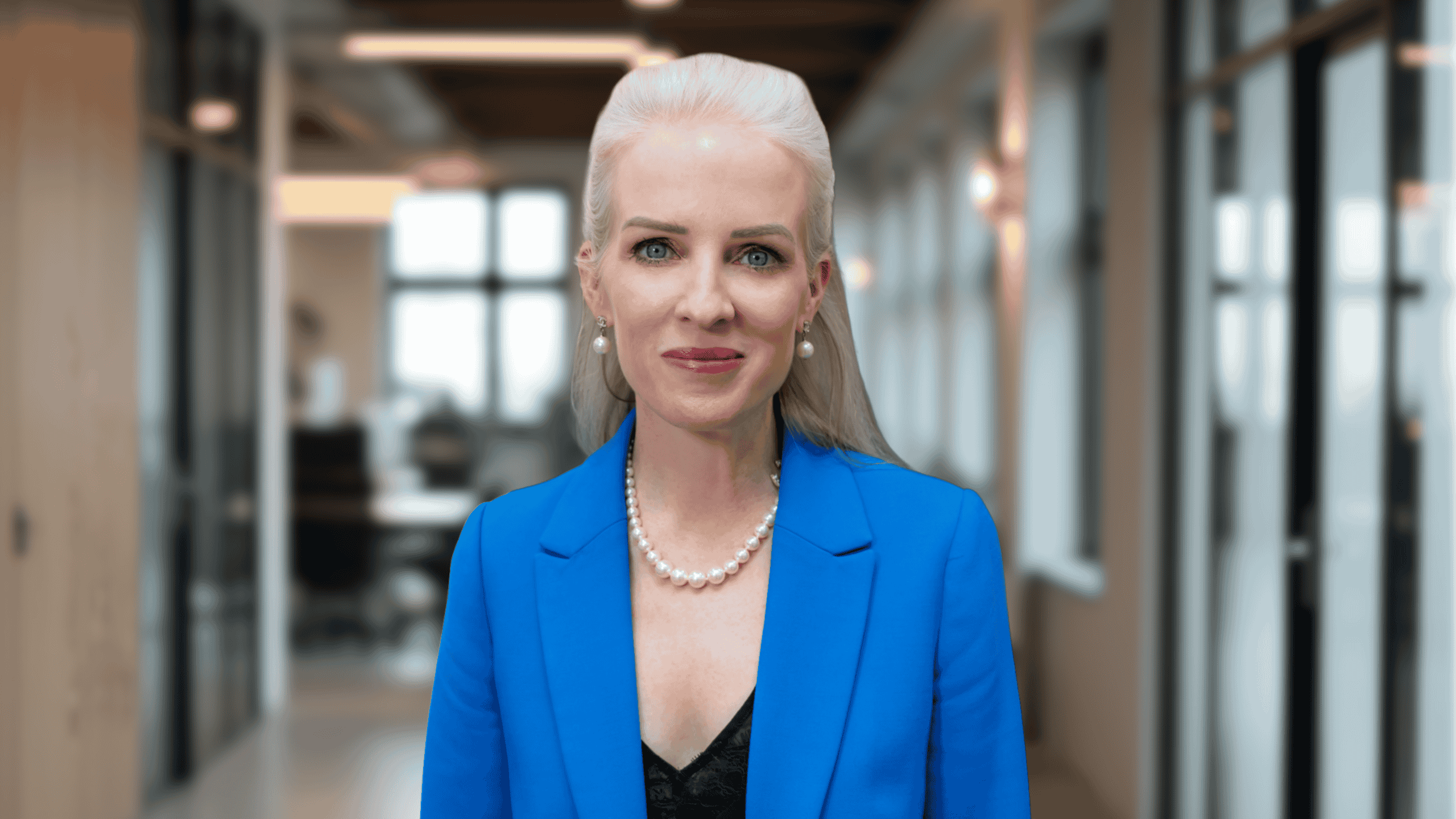
To mark International Women’s Day 2026, senior executive women share their thoughts on the Give to Gain principle. Lorna Conn is the CEO of Cpl and incoming Chair of the 30% Club in Ireland. She reflects on the importance of leadership support, advocacy, and systemic change to help women progress into senior roles rather than expecting them to give more.
The theme for International Women’s Day 2026 is Give to Gain. In a business context, what does this mean to you as a leader?
In a business context, ‘Give to Gain’ recognises that effective leadership is characterised by generosity – not only in terms of resources, but also in terms of time, mentorship, and opportunities. By investing in the development of others within the organisation, we enhance overall organisational strength and achieve broader collective success.
For me, ‘Give to Gain’ is less about asking women to give more and more, and more about leaders giving the support and sponsorship needed to unlock the potential already present in their organisations. The notion that women must continue to give to gain may reinforce the perception that we already contribute significantly, and perhaps it is the system itself that should adapt to better support women who balance work with other responsibilities outside the traditional patriarchal model. A theme such as ‘Fix the system, help us gain” resonates more intuitively to me.
Looking at your own career, what opportunities or support were most pivotal in accelerating your leadership journey, and how are you now paying that forward?
The most pivotal support I received in accelerating my leadership journey was advocacy by senior management when I wasn’t in the room. There was one instance in particular, where I was almost overlooked for a promotion that required an international relocation on the misplaced (albeit well-intentioned!) assumption that, as a new mother, I wouldn’t be interested in the opportunity. I was so grateful for the senior female leader who stepped up and spoke on my behalf, ensuring the opportunity was afforded to me. Today, I try to pay that forward by actively advocating for talented colleagues, ensuring opportunities are visible and encouraging people to put themselves forward for roles they may not initially consider.
Where do you believe organisations are still falling short in advancing women into senior decision-making roles, and what tangible actions would you prioritise?
Undoubtedly, it is the senior rungs of the ladder up to and including C-Suite. I would prioritise tangible career progression plans that expressly pipeline female talent, ensuring there is ample coverage for succession at every rung of the career ladder. This must be an inherent part of succession planning in every organisation. Where the pipeline is not strong enough, organisations must ask why. Are there structural barriers, cultural norms or career pathways that unintentionally slow women’s progression?
In today’s economic climate, how can businesses ensure that gender equality remains a strategic priority rather than a secondary consideration?
Women represent the most educated segment of our workforce, with 63% of women in employment holding a third-level qualification compared to 51% of men. Despite this, they continue to be disproportionately concentrated in part-time roles and remain under-utilised in high-value digital and leadership positions. This imbalance suggests a significant untapped talent pool within organisations.
Organisations that actively tap into this valuable talent pool stand to optimise their internal workforce rather than competing for scarce talent externally. Our most recent research from the 30% Club in Ireland, titled “The Courage Dividend,” shows that organisations committed to gender-balanced leadership see tangible benefits, including stronger leadership and decision-making quality, improved talent attraction and retention, and higher employee engagement. For that reason, gender-balanced leadership should not be viewed as a social initiative but as a strategic investment in long-term organisational performance and resilience.
What is one practical commitment you believe every business leader should make in 2026 to truly embody the principle of Give to Gain?
I believe every business leader should strive to offer as flexible a working environment as possible, recognising that there are ‘seasons’ in an employee’s professional life where personal responsibilities cannot fold neatly into a traditional 9-to-5, Monday-to-Friday schedule. Practical examples of flexibility include offering remote work options, flexible hours, job-sharing arrangements, or compressed workweeks to support employees as their circumstances change. It is important to offer these solutions consistently across the entire workforce, ensuring that flexibility is not perceived as a response to a uniquely female issue. By normalising flexibility for everyone – parents, caregivers, students, or those pursuing personal development – we create a more equitable and supportive workplace culture where all employees can thrive.
Read more on International Women’s Day: