By Business & Finance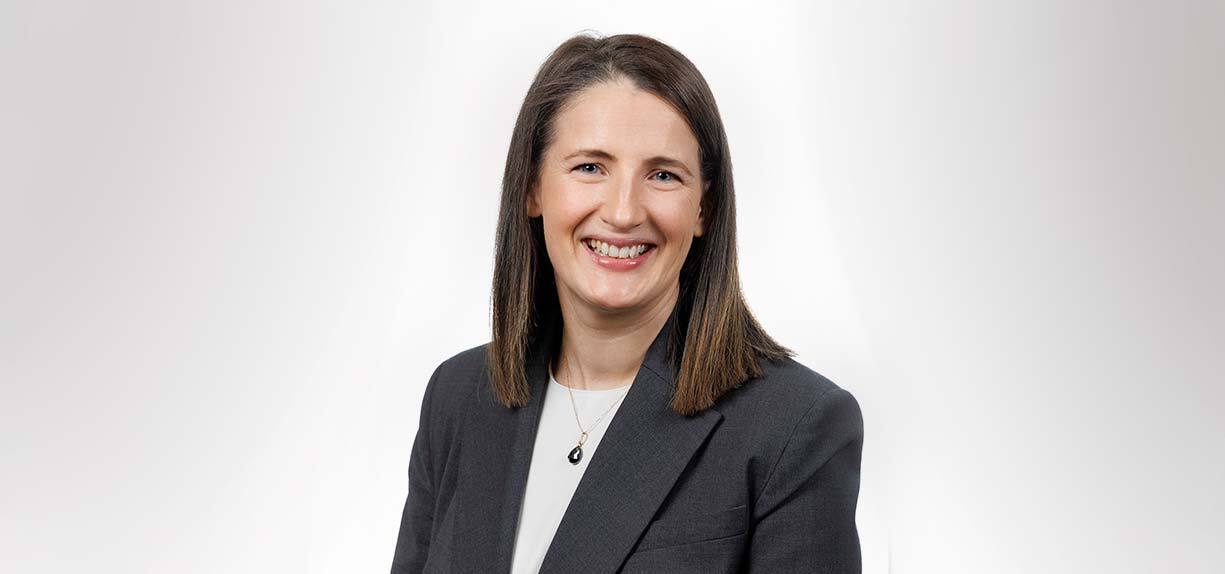
Aisling Mormon is the General Counsel at Speed Fibre Group. With over 16 years’ experience across telecoms, technology and financial services, she leads legal and compliance at Speed Fibre Group. The group, owner of Enet and Magnet Plus, recently acquired BT Communications Ireland Ltd.
By Héloïse Chaudot
What was your first job?
My first job was at Bewley’s Café in Nutgrove, where I worked part-time for two years while in school.
Balancing work and studying taught me time management from a young age, while I also learned the importance of responsibility, teamwork, and customer service – lessons that have stayed with me throughout my career.
What are your main priorities and goals in your current role?
A big part of my role is making sure the legal function at Enet is not just reactive but proactive – adding strategic value to all aspects of the business.
It’s very easy for legal teams to get pulled into repetitive work, so one of my key priorities has been cutting through that by streamlining processes, introducing smart automation where it can be applied, and ultimately freeing up the team to focus on the work that really matters.
That’s become even more important as we support Speed Fibre Group’s continued growth.
With developments like the recent acquisition of BT Communications Ireland Limited, we’re operating at a greater scale, with more complexity and opportunity. For me, the goal is to ensure the legal team is not just keeping pace with that growth, but actively enabling it.
What pushed you to pursue a career in this field?
At school, my favourite subjects were English and History, so studying law felt like a natural next step for me.
I originally imagined myself as a criminal lawyer, but a week of work experience in the Four Courts, sitting in on a murder trial, quickly changed that for me – I realised it just wasn’t the right path.
During my training in London at Herbert Smith Freehills Kramer, I found myself naturally gravitating towards corporate and commercial law.
I really enjoyed the mix of problem-solving, practicality and variety of work. For me, a lot of it feels like common sense, and this suits how I think and work. Overall, when it came to making the final decision on which law I wanted to specialise in, it felt like a clear decision for me.
How do you motivate yourself and your team?
For me, a lot of motivation comes down to respecting people’s time. When a team knows their efforts are going into meaningful, interesting work, you see a real difference both in energy and performance.
I work hard to create an environment where we’re comfortable challenging each other – pushing ourselves and our colleagues to go further and to keep asking ‘why?’. Just as importantly, it’s about supporting one another and recognising successes along the way, celebrating these wins, no matter how big or small.
That balance of challenge and encouragement is what enables people to do their best work.
In one sentence, how would you define success?
Success is having a team that feels challenged, engaged and supported to thrive.
How do you relax?
Exercise is a big part of how I switch off and relax. Honestly, I’m not always as consistent as I’d like, but I cycle to the office and try to fit in short yoga sessions whenever I can.
Even ten minutes is enough to reset and clear my head, which makes a real difference.
What is your favourite (non-business) book?
A Tree Grows in Brooklyn by Betty Smith. It’s one of the most memorable and beautifully written books I’ve read in the last decade.
It’s the kind of story that stays with you long after you’ve finished it.
What’s the best piece of advice you’ve ever been given?
“Don’t sweat the small stuff.”
It may sound like simple advice, but it can be incredibly difficult in a legal career. Especially where you’re trained to focus on every detail – big and small.
Early on, it can feel like everything matters equally, so learning to step back and prioritise what truly counts takes conscious effort.
I try to apply it outside of work too. When one of the kids spills something at exactly the wrong moment, and I mean like a punnet of blueberries all over the kitchen as you’re rushing out the door, I remind myself to see the funny side.
It’s not always easy, but it definitely helps keep things in perspective!
How do you handle adversity?
Thankfully, I’m quite good at managing intense periods of pressure, and having a clear goal in sight helps me stay motivated. A great example was when Speed Fibre Group made the recent acquisition of BT Communications.
Those few months involved late nights and weekends, but what got me through was staying focused on completing the transaction and appreciating the camaraderie that comes from working closely with a team during challenging times.
There’s something about shared exhaustion that brings out both resilience and a sense of humour.
What are the aspirations for the future of the business?
To continue growing and being a leader in the telecommunications industry, particularly in how we run and position the legal function.
With the integration of BT into Speed Fibre Group, we’re entering an exciting phase with even greater opportunities to innovate, future-proof processes, and support the business as it scales.
Personally, I want the legal team to be seen not just as a support function, but as a true strategic enabler of that growth.
Read more 60 Seconds With:
Niamh Collins, Centre Director of Guinness Enterprise Centre